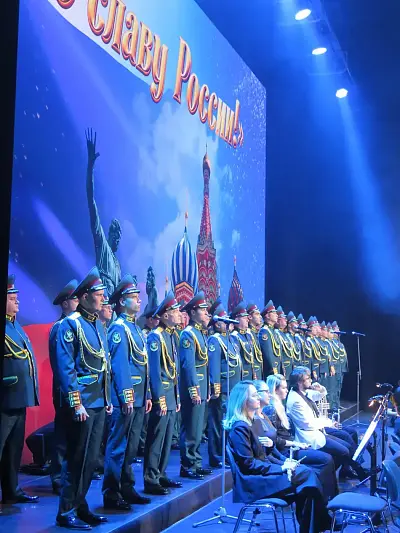
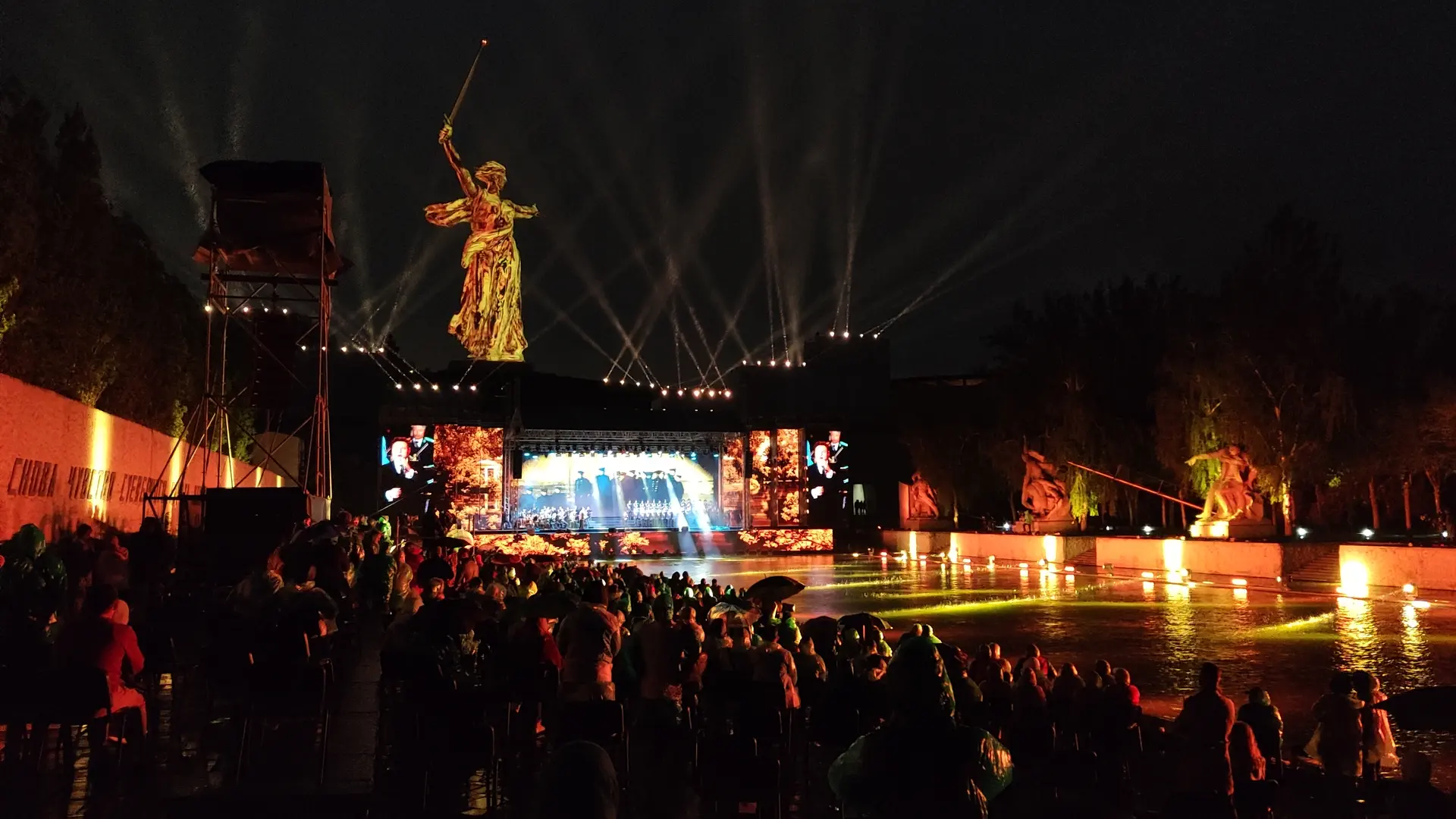
The ensemble performed a concert program at Mamayev Kurgan in Volgograd dedicated to the 76th anniversary of the Soviet people's victory in the Great Patriotic War
Mamayev Kurgan in Volgograd dedicated to the 76th
anniversary of the Soviet people's victory in the Great Patriotic War
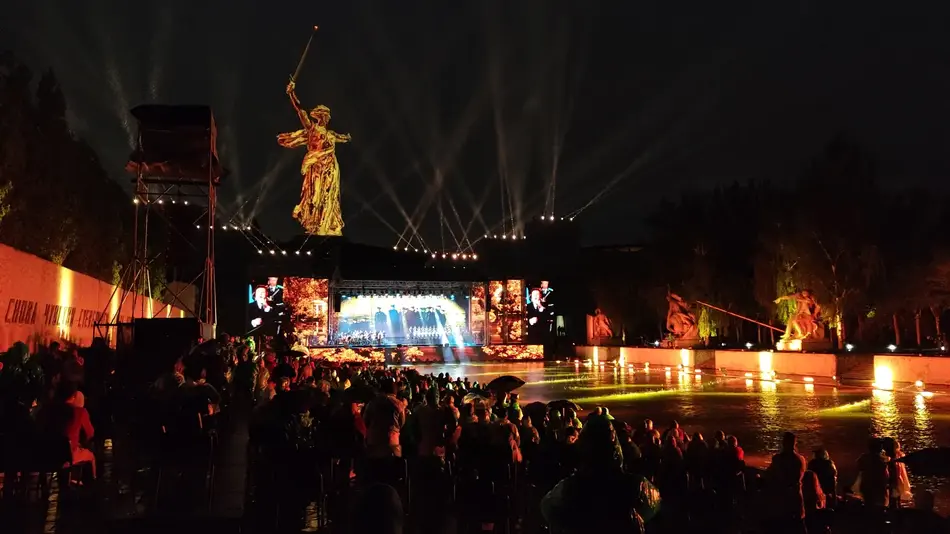
The Hero City of Volgograd is one of the most famous cities to bear this title, and the Medal for the Defense of Stalingrad has become a symbol of the courage of the city's defenders. During the winter months of 1942-1943, the largest battle of World War II took place here. The Battle of Stalingrad, one of the bloodiest battles in human history, ended on February 2, 1943, with the Soviet Army's counteroffensive and the decisive defeat of the German Sixth Army. More than 91,000 German soldiers and officers, led by Field Marshal Paulus, were captured.
The significance of the Battle of Stalingrad cannot be overestimated. The victory of the Soviet forces was not only of military importance, but also had a profound political impact. The Soviet Army's victory at Stalingrad shattered the myth of the invincibility of the German army. In the post-war years, a unique memorial complex dedicated to the heroic defense of Stalingrad was unveiled on Mamayev Kurgan.
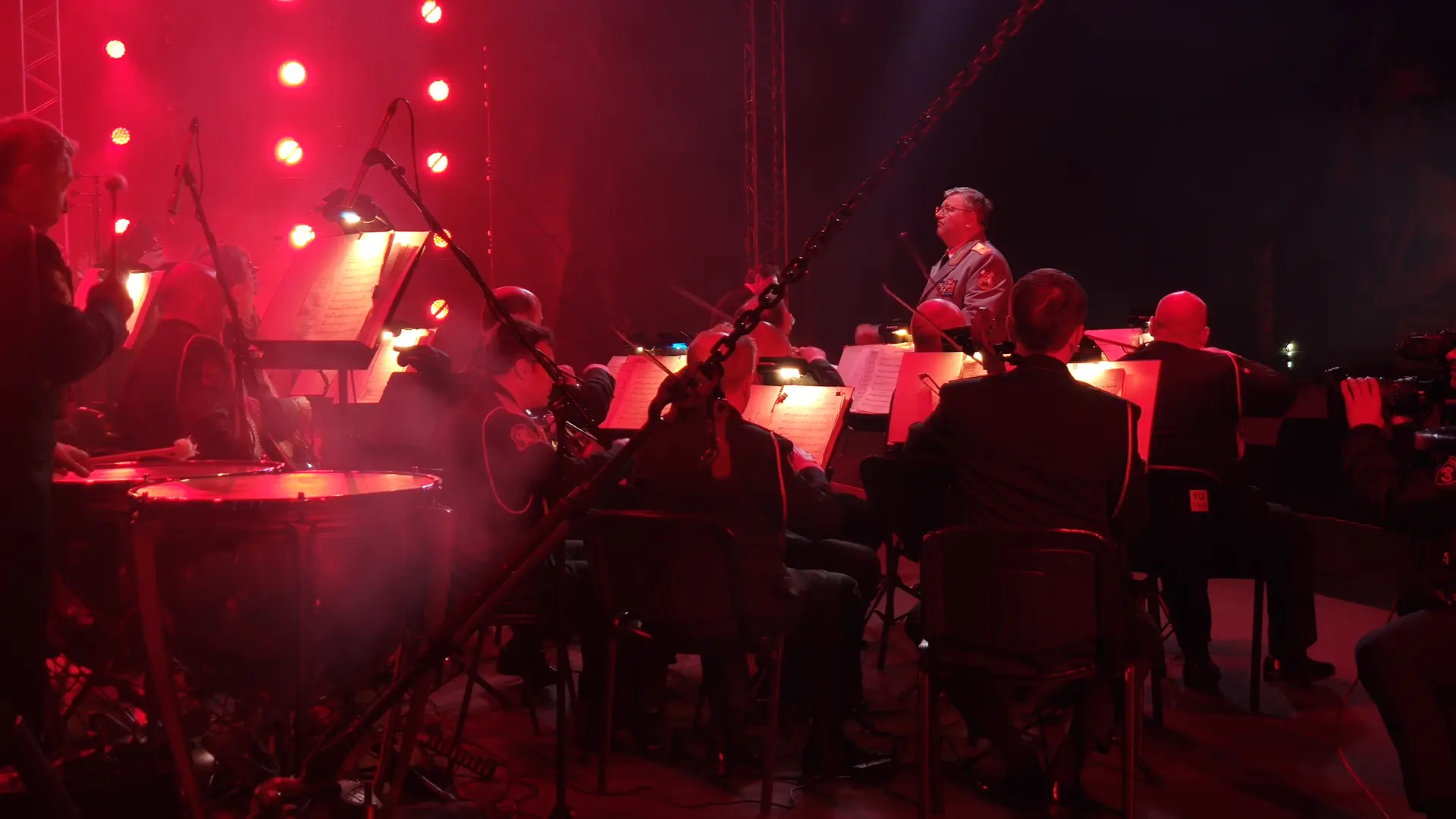
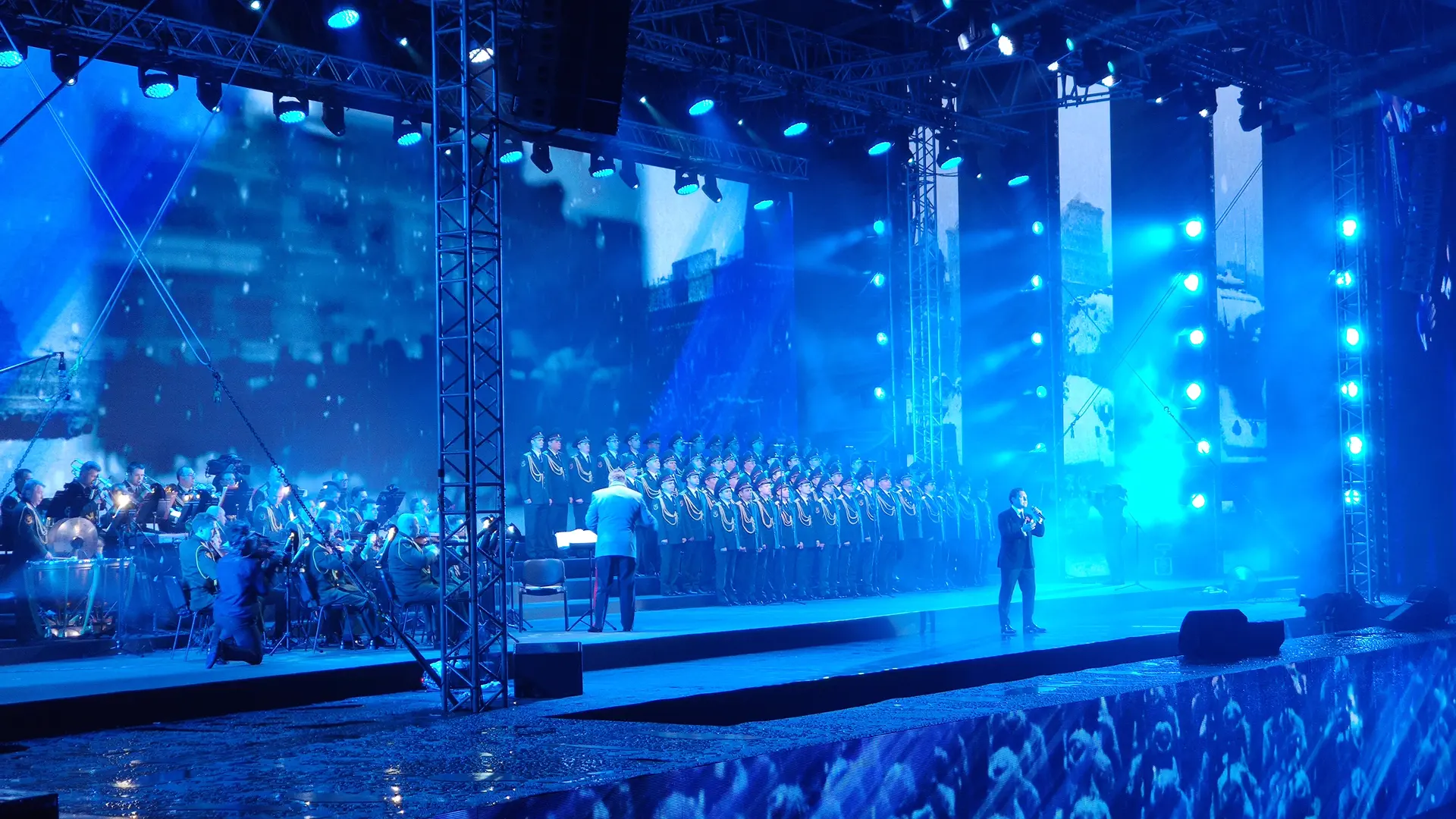
One of the central events dedicated to the Victory Day celebration in Volgograd was a musical composition with the participation of the Academic Song and Dance Ensemble of the National Guard Troops of the Russian Federation under the direction of artistic director and chief conductor, People's Artist of Russia, Major General Viktor Eliseev and popular performer Alexander Kogan.
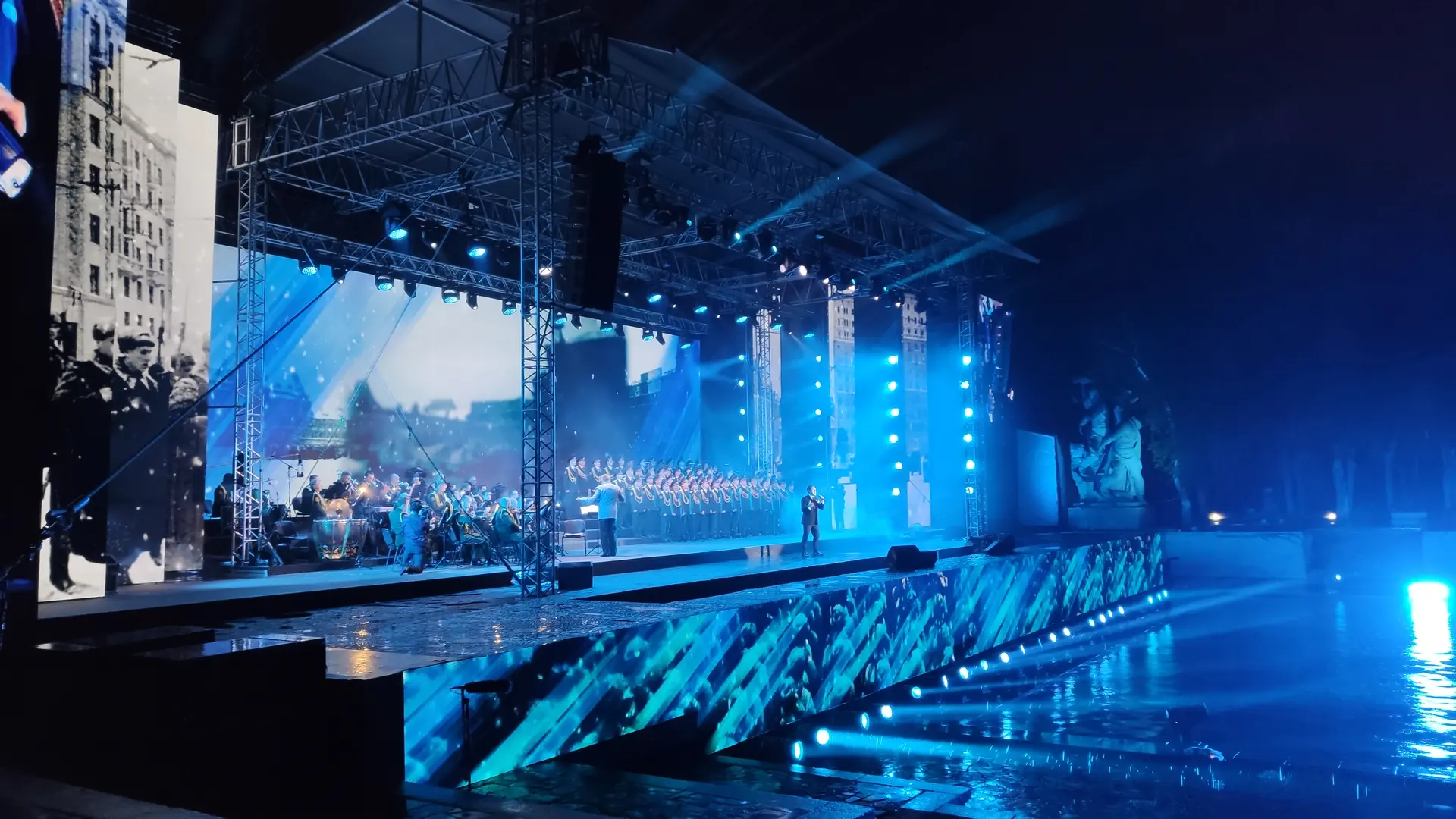
The festive concert took place on May 9, 2021, at the foot of Mamayev Kurgan. The musical composition consisted of seven episodes that told about the stages of the Soviet people's struggle against the German fascist invaders.
In the prologue of the concert program, the song "Silence on Mamayev Kurgan" (music by Alexandra Pakhmutova, lyrics by Viktor Bokov) was performed by Alexander Kogan and the Academic Ensemble of Songs and Dances of the National Guard Troops of the Russian Federation.
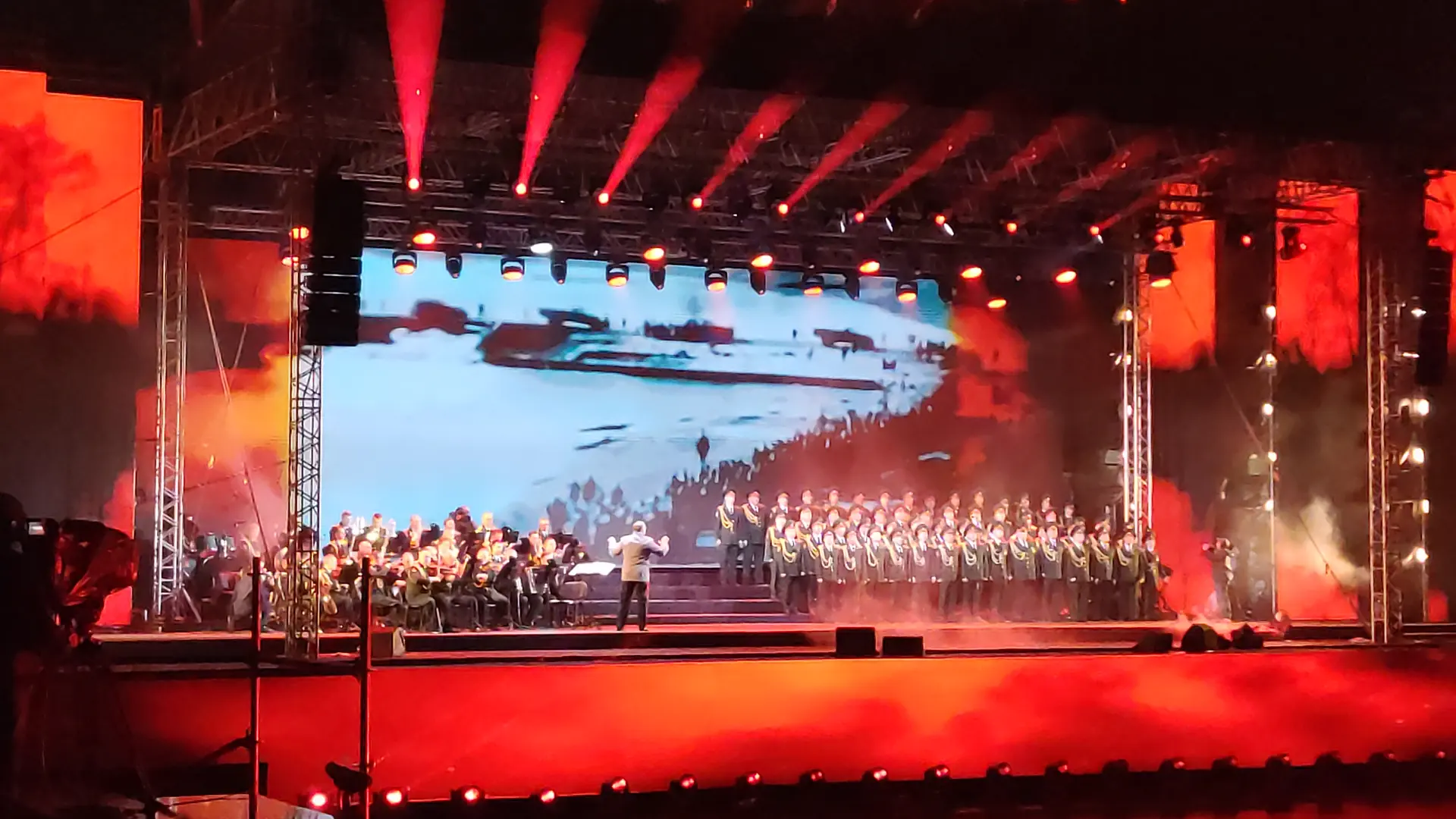
At the beginning of the main part of the concert, the choir of the Academic Song and Dance Ensemble of the National Guard Troops of the Russian Federation performed "Holy War". This song by the composer Alexander Alexandrov to the poems of Vasily Lebedev-Kumach from the very beginning of the war became the anthem of defense of the Fatherland. It combines the menacing tread of the march and a broad melodic chant. The performance of "Holy War" was accompanied by a demonstration on the screen of footage of the historical chronicle of the beginning of the Great Patriotic War, the formation of the people's militia defenders of Moscow.
The concert featured the following songs: "The Fourth Day of the War" (music and lyrics by Viktor Tretyakov), "Hot Snow", "Let's Bow to the Great Years" (music by Alexandra Pakhmutova, lyrics by Mikhail Lvov)," Dark Night "(music by Nikita Bogoslovsky, lyrics by Vladimir Agatov)," Song of Frontline Correspondents" (music by Matvey Blanter, poems by Konstantin Simonov), "Random Waltz" (music by Mark Fradkin, poems by Evgeny Dolmatovsky), "Our Medical battalion" (music by Igor Luchenka, poems by Mikhail Yasen), "Cranes" (music by Jan Frenkel, poems by Rasul Gamzatov), "Echo of a Long Parade" (music by Alexandra Pakhmutova, poems by Nikolai Dobronravov) and others. The artists' performances were accompanied by prolonged applause.
The huge screens displayed wartime photographs, newsreel footage, performances by front-line concert bands, and excerpts from war films such as "Two Soldiers," "Six O'Clock in the Evening After the War," "Hot Snow," "The Fate of a Man," "The Ballad of a Soldier," and "The Cranes Are Flying."
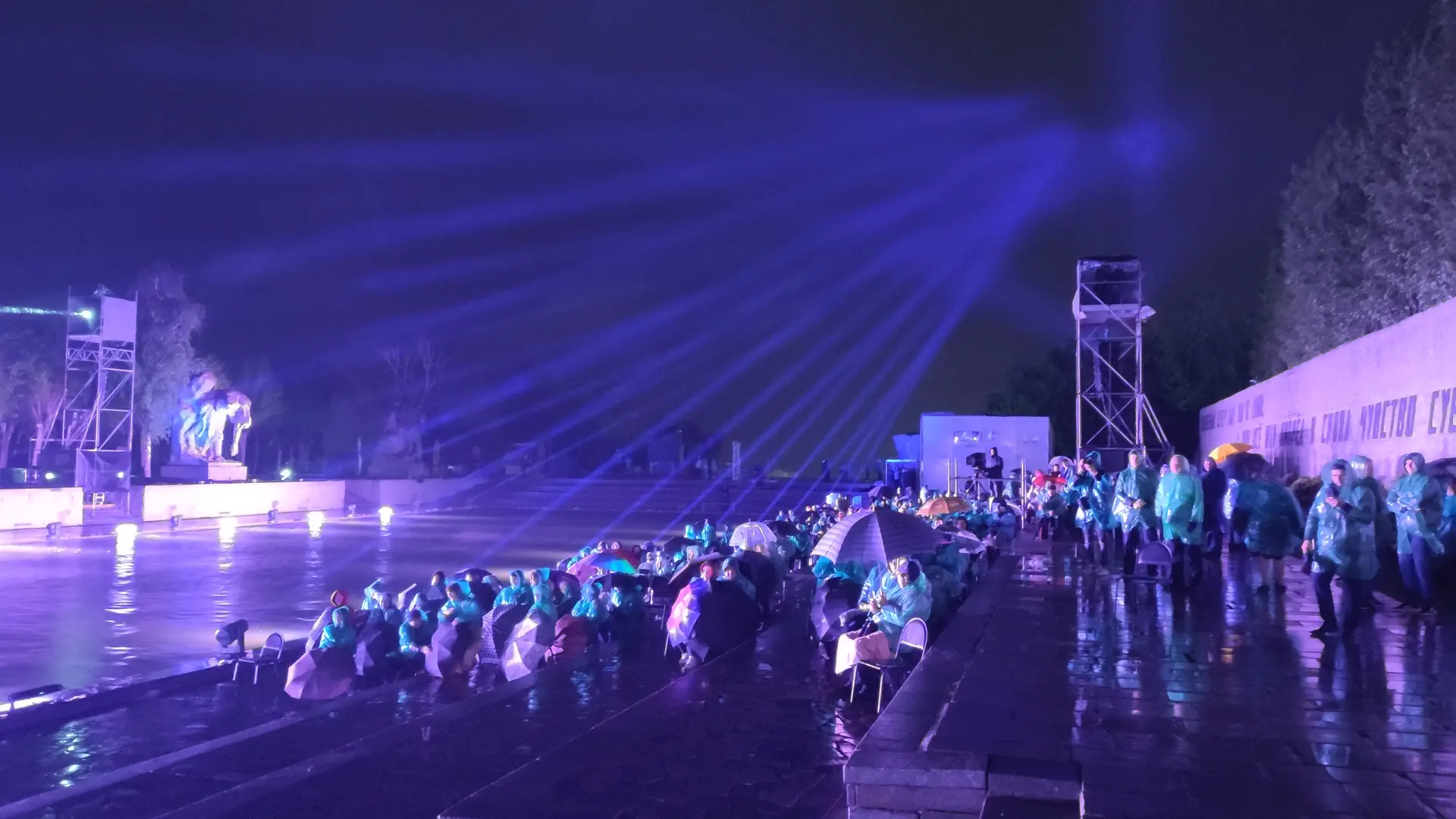
Participants of the defense of Stalingrad, veterans of the Great Patriotic War, home front workers, representatives of public organizations, and residents of Volgograd gathered on the square at the foot of Mamayev Kurgan.
The voice of the legendary announcer Yuri Levitan was heard. The audience honored the memory of all those who gave their lives for the freedom and independence of our Motherland with a minute of silence.
The song "Eh, the Roads" was performed by the choir of the Academic Ensemble of Songs and Dances of the National Guard Troops of the Russian Federation. One of the most famous war songs was written by composer Anatoly Novikov to the lyrics of Lev Oshanin shortly after the end of the Great Patriotic War, in the autumn of 1945, for the theatrical program "Victory Spring." The idea of creating this program for the holiday of November 7, 1945, belongs to Sergei Yutkevichu – the chief director Ensemble of Song and Dance of the NKVD Troops (now the Academic Ensemble of Song and Dance of the National Guard). This song, according to the director's idea, is associated with the return of soldiers home from Germany.
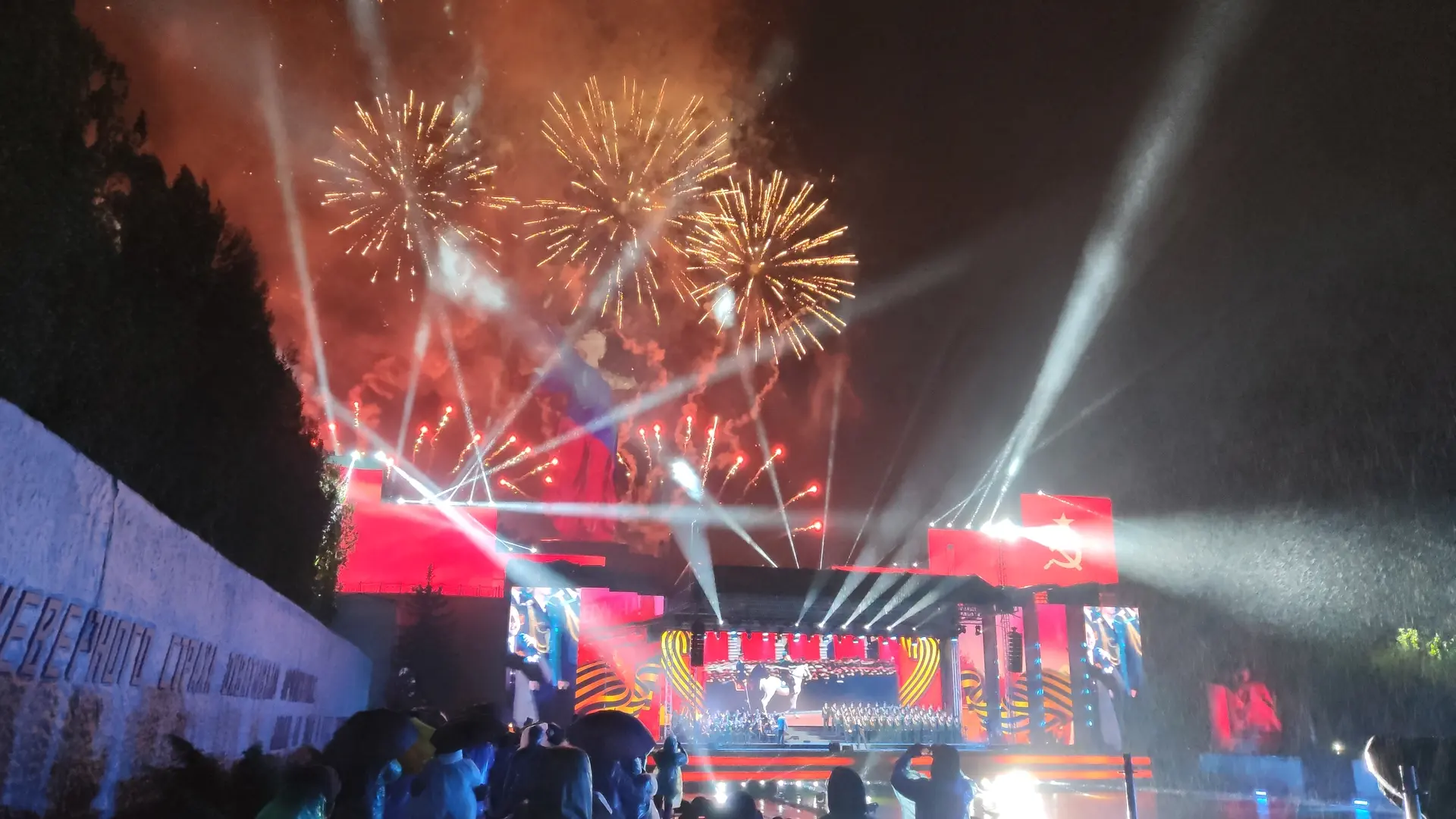
The festive concert traditionally ended with the song "Victory Day" by composer David Tukhmanov, based on the lyrics by Vladimir Kharitonov, performed by Alexander Kogan and the Academic Ensemble of Songs and Dances of the National Guard Troops of the Russian Federation, under the direction of the artistic director and chief conductor, People's Artist of Russia, Major General Viktor Eliseev. The final chords of the song coincided with the first salvos of the Victory Day fireworks display.


LATEST NEWS
See all newsThe ensemble took part in the “Main Children’s Songs” project

“For the Glory of Russia!” – The ensemble performed at the State Concert Hall